
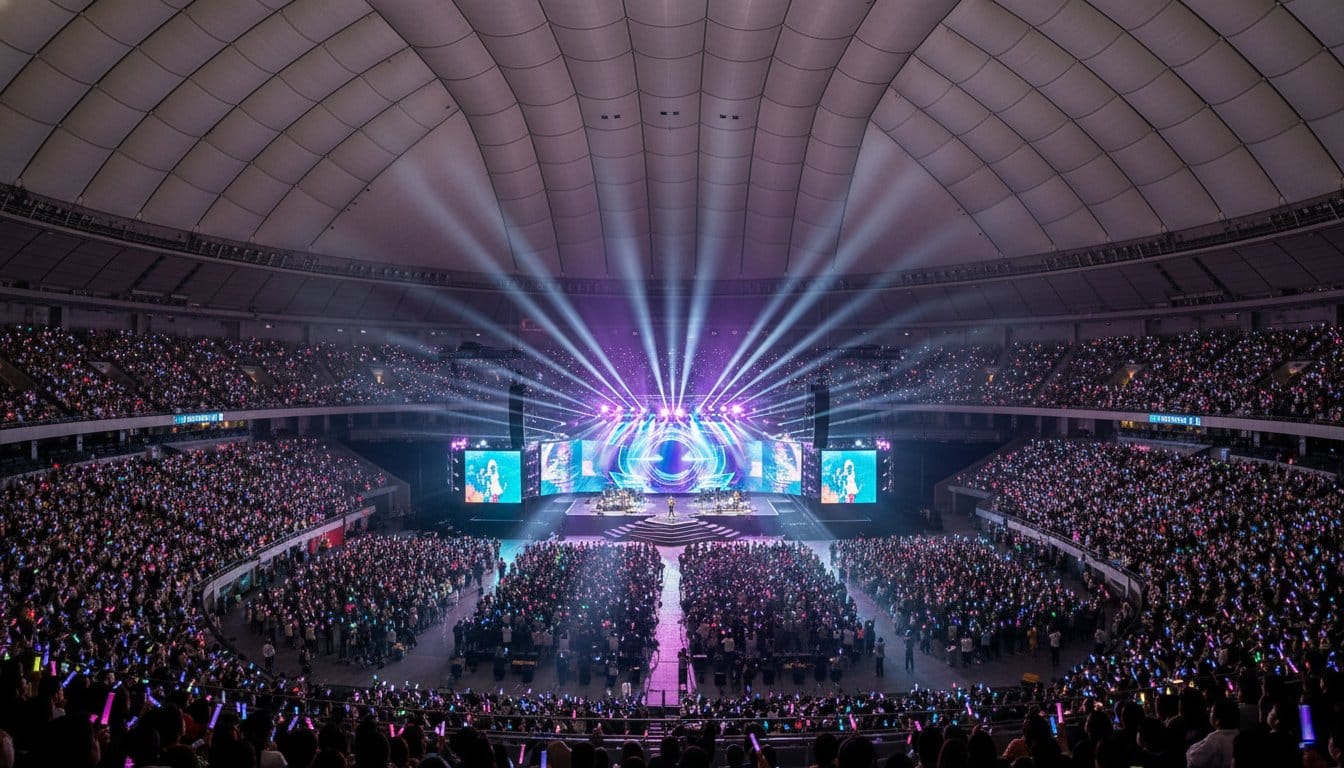
In March 2023, an international fan traveled over 5,000 miles to Tokyo only to discover their expensive ticket was located in the highest balcony of the 55,000-seat stadium. It’s a common frustration because Japan’s unique lottery system rarely lets you pick your exact spot, making it difficult to find the best seats at Tokyo dome for concerts events. You likely already feel the stress of trying to understand the difference between “Arena” and “Stand” seating while facing websites that require a Japanese phone number and address just to register. This guide will remove that anxiety by explaining the venue’s layout and highlighting which sections offer the most immersive views. We’ll also show how Jasumo Tickets functions as your Japan-based concierge to handle the complex booking process on your behalf. You’ll discover the specific advantages of each level and learn a reliable way to secure tickets without needing a local residency. By the end of this article, you’ll have a clear plan to ensure your Tokyo concert experience is exactly what you imagined.
How can I make a group booking?
For group bookings, please reach out via our Contact Us page with your event name, date, and number of tickets needed. Our team will prepare the best available options and assist you personally.
Contact Us →Key Takeaways
- Understand the “blind assignment” system used in Japan to manage your expectations regarding when and how your specific seat location is revealed.
- Weigh the pros and cons of the Arena floor versus the permanent Stands to choose between being close to the action or having a clear, elevated view.
- Identify the best seats at tokyo dome for concert by learning how stage configurations and “obstructed view” designations impact your overall visibility.
- Navigate the complex technical barriers for international fans, including the requirement for Japanese phone numbers and specific digital ticketing apps.
- Learn how Jasumo Tickets simplifies the process by acting as your local concierge to handle Japanese registration requirements and secure your entry.
Understanding the Tokyo Dome for Concerts Layout and the ‘Blind’ Seating System
Tokyo Dome is the most iconic music venue in Japan. Since opening in 1988, this massive stadium has hosted the world’s biggest stars, from Michael Jackson to Taylor Swift. It holds 55,000 people for major concerts. For many fans, securing the best seats at tokyo dome for concert events is the top priority. However, the Japanese ticketing system works differently than platforms like Ticketmaster or AXS. You don’t get to browse a seating map and click on a specific chair. Instead, Japan uses a “blind assignment” system that can feel confusing for international visitors.
When you buy a ticket in Japan, you are usually entering a lottery for a seat category rather than a specific spot. Promoters don’t reveal your exact row or seat number until very close to the show date. This is where JasumoTickets.com provides essential support. We handle the Japanese-side process on your behalf, navigating these lotteries and managing the technical requirements that often block overseas fans. For a deeper look at the Tokyo Dome layout and history, it’s helpful to know that the venue was Japan’s first covered stadium, which changed how live entertainment is produced in the country.
In the early stages of a ticket purchase, you might only see a “Management Number” on your confirmation. It’s a common mistake to think this is your seat number. It isn’t. This number is an internal tracking ID for the ticket agency. Your actual seat location is typically hidden until 3 to 7 days before the event. This delay is a standard security measure in Japan to discourage unauthorized ticket reselling and to ensure a fair distribution process for all attendees.
Why You Can’t Choose Your Seat in Japan
Tokyo Dome Capacity and Scale
The scale of Tokyo Dome is immense. The distance from the back of the upper deck to the main stage can exceed 150 meters. Most concerts use an “End Stage” setup, where the stage sits in the outfield. If the artist uses a “Center Stage” configuration, the 55,000-capacity layout shifts, often creating more “Arena” level seating. You can guess your general area by looking at your “Gate” number. Gates 11 and 25 usually lead to the Arena floor. Gates 20 through 24 serve the lower stands. If your ticket lists Gate 40 or 41, you’ll be in the upper deck. Finding the best seats at tokyo dome for concert views often means hoping for a lower gate number, though the venue’s acoustics are designed to carry sound clearly even to the highest rows.
If you are trying to attend an event in Japan and official platforms are not accessible, JasumoTickets.com can help. To request ticket assistance or check availability for upcoming shows at Tokyo Dome, visit JasumoTickets.com.
Arena vs. Stand Seats: Which Experience Should You Target?
Tokyo Dome for concerts is a massive venue with a capacity of 55,000 for major music events. Choosing the best seats at tokyo dome for concert depends entirely on your priorities. The venue layout is divide into two primary zones: the Arena and the Stands. The Arena refers to the temporary seating placed directly on the baseball field. The Stands are the permanent, tiered seats that wrap around the stadium. Because Japanese ticketing systems often use a lottery, you might not know your exact seat until shortly before the show. This is why many international fans use JasumoTickets to navigate the complex application process and secure local support.
The Arena Level: High Risk, High Reward
The Arena is where you find the highest energy. Fans in this section are on the same level as the stage, providing the closest proximity to the performers. If you land a seat in “A-Block,” you are likely within the first 15 rows. This area is the only place where you can catch “Silver Tape,” the metallic confetti launched during the finale. In Japanese concert culture, these ribbons are prize souvenirs.
However, the Arena has a significant visibility risk. The floor is completely flat. If you are under 170cm in height, your view might be obstructe by the person in front of you for the entire three-hour show. You are also at the mercy of the “Block” system. Arena layouts change for every artist, but generally, A and B blocks are close, while D or E blocks can be over 100 meters away from the main stage. If you end up in a rear block, you will spend most of the night watching the LED screens. For those traveling to Tokyo for a concert from abroad, the Arena is a gamble that pays off only if you are tall or lucky with your block assignment.
The Stand Levels: Reliability and Perspective
The Stands offer a more predictable experience. The 1st Floor Stands (Lower Level) are often considere the “sweet spot” for the best seats at tokyo dome for concert. These seats are elevate, meaning no one can block your line of sight. Rows 1 through 20 of the 1st Floor provide a perfect balance of proximity and a clear, panoramic view of the entire stage production.
The 2nd Floor Stands (Upper Level) are much higher and further back. While the distance is significant, these seats provide the best view of the crowd’s light sticks. Seeing 50,000 penlights moving in unison is a signature Tokyo Dome for concerts experience. For some corporate-sponsored events, Balcony Seats or “Suites” are available between the 1st and 2nd floors. These offer more legroom and padded chairs, though they are rare for standard J-Pop or K-Pop tours. Because official platforms require a Japanese phone number and address, JasumoTickets helps global fans access these different tiers by handling the local logistics on their behalf. If you want to ensure you get into the building without the stress of Japanese-only apps, visit JasumoTickets.com to submit a request for your upcoming event.
Evaluating Viewing Angles: Where the Best Views Truly Are
Tokyo Dome for concerts is a massive venue with a capacity of 55,000 people. Choosing the best seats at tokyo dome for concert events often involves a trade-off between a direct view and physical proximity. If you sit directly in front of the stage, you see the full production as the director intended. If you sit on the sides, you’re physically closer to the artist but might miss the central backdrop visuals. Most J-Pop and K-Pop acts use a “Hanamichi” or runway that leads to a sub-stage in the center of the arena.
Japanese promoters often sell “Chushaku-tsuki” tickets, which translates to seats with an obstructed view. These tickets are usually ¥1,000 to ¥2,000 cheaper than standard reserved seating.
Binoculars are not just an accessory in Japan; they’re a necessity. Even in the lower stands, the distance to the main stage can exceed 100 meters. Most fans bring 8×21 or 10×25 magnification binoculars to see facial expressions while relying on the massive LED screens for the broader choreography. It’s a standard part of the Japanese concert experience that helps bridge the gap in such a cavernous space. If you don’t have a pair, you can often find them for sale at electronics stores like Yodobashi Camera near the venue for around ¥3,000 to ¥5,000.
The ‘Dead Center’ Stand View
Seats located near Gates 20 through 24 offer the most balanced experience. This area provides a “Dead Center” view of the entire production. The sound quality is consistently best here because the audio engineers tune the system for the center of the house. You can refer to the official Tokyo Dome seating map to see how these sections align perfectly with the stage mapping. While you’re far from the artist, you get the best view of the synchronized light shows and complex screen visuals. It’s the most comfortable way to watch a high-production show without experiencing neck strain from looking sideways all night.
Side-Stage Stand Views
Side-stage seats are popular for fans who want to be physically closer to the performers without being on the arena floor. These seats are often located in the “wings” of the 1st floor stands. You get a unique look at the artists as they enter and exit the stage. You can often see them interacting with staff or preparing for their next number “off-camera.” The risk is that scaffolding or large side-screens might block the main backdrop. However, the energy is often higher in these sections because the artists frequently walk to the very edge of the stage to wave at these fans. JasumoTickets.com often helps fans secure these specific blocks when they prefer proximity over a perfect central view.
If you’re trying to attend an event in Japan and official platforms are not accessible due to local phone number requirements, JasumoTickets.com can help. We act as your local partner in Japan to handle the entire process from sourcing to delivery. To request ticket assistance or check availability for the best seats at tokyo dome for concert tours, visit JasumoTickets.com.
How International Fans Can Secure Tickets for Tokyo Dome for Concerts
Securing a spot at Tokyo Dome is a multi-step process that often begins several months before the performance date. While you might be focuse on finding the best seats at tokyo dome for concert views, the first hurdle is simply getting into the ticketing system. Japan’s entertainment ecosystem is built primarily for residents. It relies heavily on local mobile authentication and physical residency.
The Challenge of Japanese Ticketing Apps
Digital ticketing is now the standard for major venues like Tokyo Dome. Many popular platforms, including those that utilize services like AnyPASS, require a Japanese phone number for SMS verification. This isn’t just a one-time code; the app often links directly to the specific SIM card in the device. If your smartphone isn’t compatible with the Japanese version of the App Store or Google Play, you can’t download the software needed to display your entry QR code. If you wait until you arrive in Tokyo to resolve this, you’ll likely find that registration is blocked without a local data plan.
Navigating the Lottery System as a Foreigner
Tickets aren’t usually sold on a first-come, first-served basis in Japan. Instead, they’re distributed via a complex lottery system known as “chusen.” The Fan Club Pre-sale offers the earliest access and the highest probability of securing the best seats at tokyo dome for concert layouts. After that, the General Sale opens, but these tickets often vanish within seconds. A major pain point is the payment stage. Over 87% of Japanese ticketing sites reject foreign credit cards due to strict 3D Secure protocols. For a detailed breakdown of these technical hurdles, see our guide on Buying Concert Tickets in Japan: A Complete Guide.
The reality of “Sold Out” shows in Japan is that they aren’t always impossible to attend, but they’re difficult to access without local help. When official channels fail, the secondary market is the only remaining option for high-demand shows. Popular events at Tokyo Dome often see secondary market prices range from ¥45,000 to over ¥180,000 depending on the artist and the proximity to the stage.
This is where JasumoTickets.com provides essential support. As a Japan-based concierge, we act as your local proxy to navigate these restrictive systems. We handle the Japanese-only interfaces, manage the SMS verification requirements, and process payments that would otherwise be blocke.
Our team understands that international fans face unique stress when trying to coordinate a trip around a single event. We provide clear, English-language communication and handle the logistics of digital ticket transfers or physical delivery to your hotel in Japan.
If you’re planning a trip to Japan and want to avoid the frustration of app errors or payment rejections, visit JasumoTickets.com to request ticket assistance or check availability.
How Jasumo Tickets Simplifies Your Tokyo Dome for Concerts Experience
Securing the best seats at tokyo dome for concert events is often a multi-step process that starts months before the show. For international fans, the technical barriers are often higher than the ticket prices themselves. Most Japanese ticketing platforms require a verified Japanese phone number and a local residential address to even create an account. Jasumo Tickets functions as your Japan-based concierge to remove these obstacles entirely. We handle the entire backend process, from navigating Japanese-only interfaces to managing local payment methods that often reject international credit cards.
Our team provides dedicate support for initial lottery applications, which are the primary way tickets are distributed in Japan. If a lottery is missed or unsuccessful, we source tickets from trusted secondary markets to ensure you don’t miss out. We maintain transparent communication about seat categories and pricing throughout the process. While a standard S-rank seat for a major Tokyo Dome show might have a face value of ¥15,000, secondary market prices fluctuate based on artist popularity and seat proximity.
Local Expertise for Global Fans
Being based in Japan allows us to navigate local-only platforms like Ticket Pia, Lawson Ticket, and e-plus with ease. These sites frequently block IP addresses from outside the country or require specialized apps for entry. For example, the AnyPASS system used by many major J-POP and K-POP artists requires a Japanese SIM card for authentication. We manage these complex digital transfers on your behalf so you don’t find yourself stuck at the gate. Our mission is to help foreigners access high-demand events that would otherwise be restricte to local residents. We act as your boots on the ground, ensuring your digital or physical tickets are ready for your arrival in Tokyo.
Requesting Your Tokyo Dome Tickets
The process starts with a simple inquiry. You tell us which artist or event you want to see, and we provide a clear breakdown of the availability and costs. We understand that traveling to Japan is a major investment. That is why we offer a 100% guarantee against non-delivery. If you don’t receive your ticket for any reason, we provide a full refund. This peace of mind is essential when you are trying to find the best seats at tokyo dome for concert tours from thousands of miles away.
If you are trying to attend an event in Japan and official platforms are not accessible, JasumoTickets.com can help. We bridge the gap between global fans and Japan’s vibrant live music scene. Request your Tokyo Dome concert tickets via Jasumo Tickets today and let us handle the logistics while you focus on your travel plans.
Secure Your Spot at the Big Egg
Navigating a 55,000 seat venue requires a strategy that balances proximity with clear sightlines. While arena blocks offer the most excitement, the first floor stands between aisles 20 and 40 often provide the most reliable views of the main stage. It’s vital to remember that Japan’s blind ticketing system means seat assignments usually remain hidden until a few days before the event. This process is difficult for overseas visitors because most official platforms require a verified Japanese phone number and a local address for registration.
Jasumo Tickets acts as your local partner to bypass these technical hurdles. They specialize in overcoming SMS verification barriers and handling the complex lottery applications that define the Japanese concert market. Based directly in Japan, their team manages the entire sourcing process to ensure you find the best seats at Tokyo Dome for concerts events without the stress of navigating Japanese-only apps. Every order includes a full refund guarantee if your tickets aren’t delivered, providing peace of mind for your international trip. You can secure your Tokyo Dome tickets with Jasumo Tickets today and focus on the music instead of the logistics. Your dream J-Pop or K-Pop experience is closer than you think.
Frequently Asked Questions: Best Seats at Tokyo Dome for Concerts
Usually, no. Most Tokyo Dome for concerts tickets are assigned automatically by the organizer or ticketing platform. Your seat location depends on the ticket category, lottery results, and availability at purchase time.
Arena seats are on the floor closer to the stage, offering a more immersive experience. Stand seats are elevated in tiers, giving a wider, full-view perspective of the stage.
Yes, many apps like AnyPASS require a Japanese phone number for verification. However, some events offer alternative entry methods or support through official ticketing assistance services.
Select 75 more words to run Humanizer.
Obstructed view tickets at Tokyo Dome are cheaper but partially blocked. They can be worth it for budget fans or sold-out shows, but full experience and visibility are limited.
Arrive at Tokyo Dome 1.5 to 2 hours early to allow time for security checks, merchandise shopping, finding your seat, and avoiding long entry queues before the concert starts.
